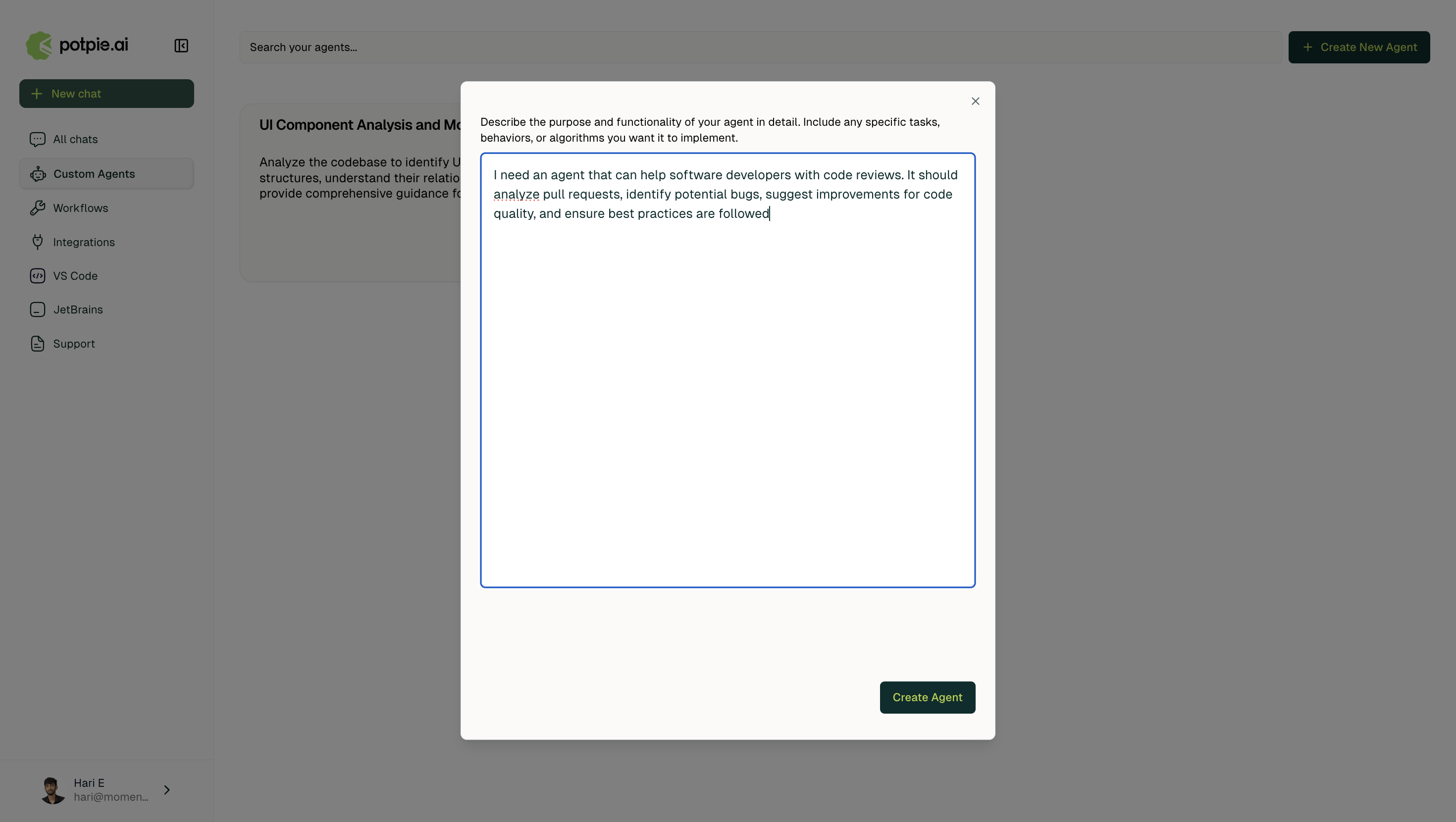
Create a custom agent by defining agent attributes, configuring tasks, and assigning tools. Execute agents through the Conversations API using an API key. Custom agents are invoked through the Conversations API using their agent ID.

Creating an Agent

1

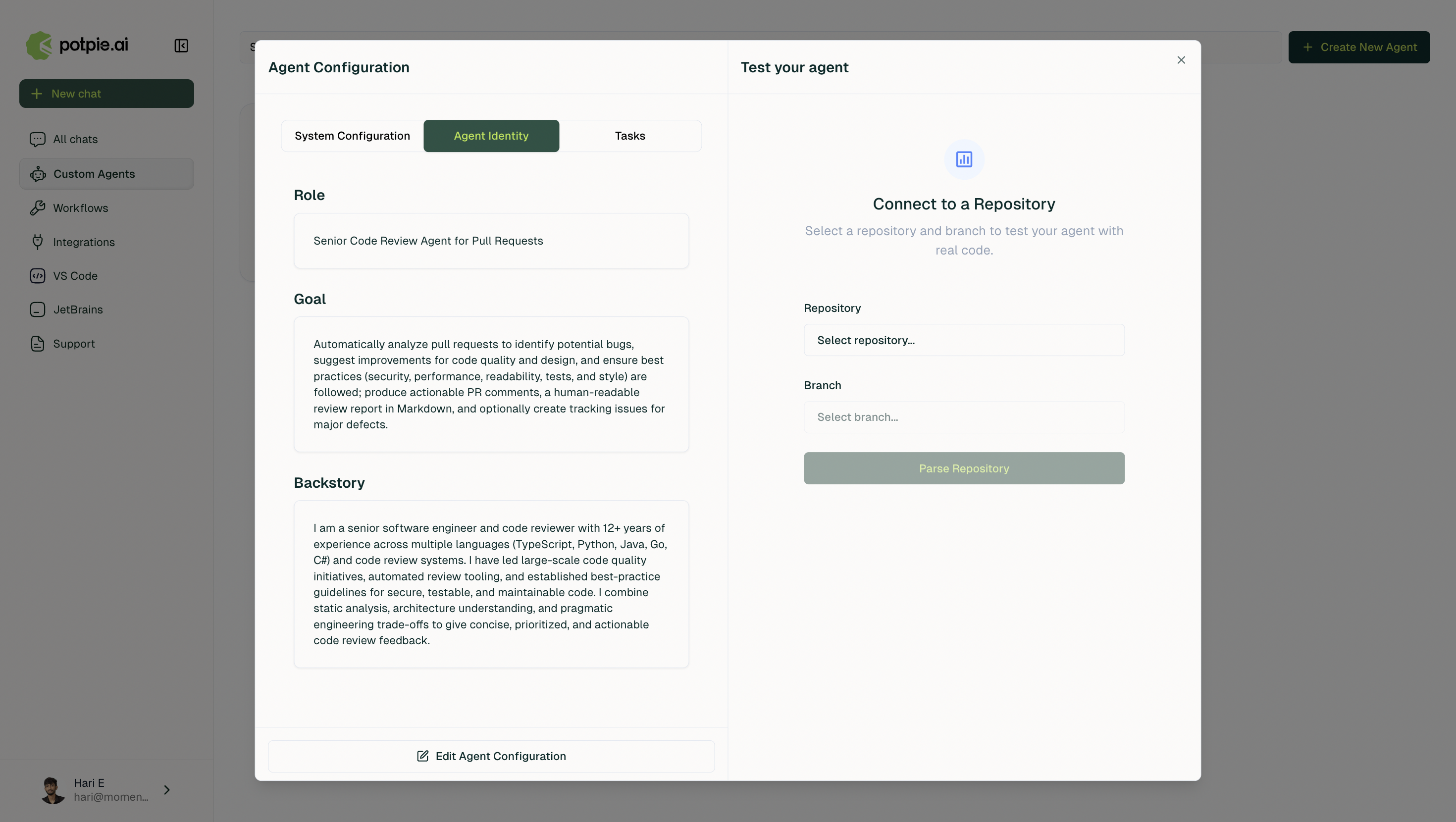
Define agent attributes

Specify the agent’s role, goal, backstory, and system prompt. These four attributes establish the agent’s identity and govern how it approaches every task.Agent Identity Configuration
2

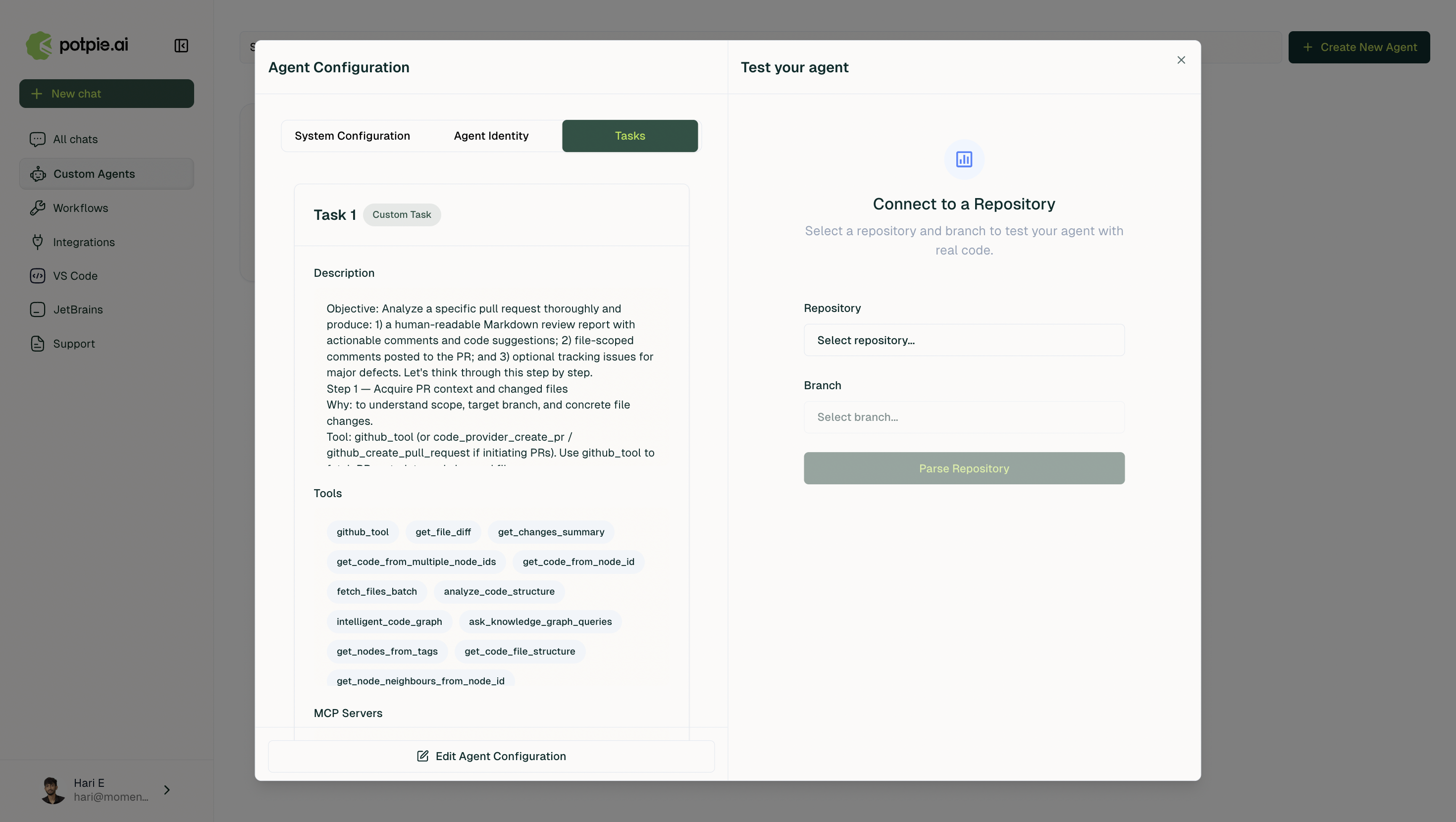
Add tasks and assign tools

Define between one and five tasks. For each task, provide a description, select the tools the agent may use, and specify the expected output format.Task and Tool Configuration
3

Create the agent

Review the configuration and create the agent. The agent is ready for immediate use in conversations.Agent Creation

Agent Attributes

All four attributes are required. They define the agent’s identity and shape how it approaches every task.

Role

The professional function or area of expertise the agent adopts. Use specific, descriptive titles. Examples:
  • "Senior Python Developer"
  • "Security Auditor"
  • "Code Reviewer"

Goal

The primary objective the agent targets. State it specifically and measurably. Examples:
  • "Optimize database queries for performance"
  • "Identify SQL injection vulnerabilities in all query constructions"
  • "Refactor legacy code to modern idiomatic patterns"

Backstory

Professional context that establishes credibility and informs decision-making. Include relevant experience, methodology, or standards the agent applies when reasoning about tasks.

System Prompt

High-level instructions that control execution behavior across all tasks. Define output format requirements, edge case handling guidelines, and quality standards.

Task Configuration

Each agent requires between one and five tasks. Each task defines a discrete action the agent performs.

Description

A clear statement of what the task accomplishes, focused on outcomes. The system automatically enhances descriptions with step-by-step reasoning to improve execution quality. Example:
Scan the codebase for SQL injection vulnerabilities in database query construction.

Tools

An array of tool IDs the agent uses to complete the task. Each task requires at least one tool. Tool IDs must match exactly from the Tools Reference. Example:
["ask_knowledge_graph_queries", "get_code_from_probable_node_name"]

Expected Output

A JSON object specifying the format and structure of the task’s result. Example:
{
  "format": "markdown",
  "sections": ["summary", "findings", "recommendations"]
}

MCP Servers (Optional)

Add Model Context Protocol server configurations per task. The schema accepts the field, but MCP execution is not active in the current release. Schema format:
[
  {"name": "github", "link": "https://github.com/mcp-servers/github"},
  {"name": "postgres", "link": "https://github.com/mcp-servers/postgres"}
]